
Puppy Training Timeline: What to Teach at Every Stage, 8 Weeks to 12 Months
Start training the day your puppy comes home, usually around 8 weeks. The critical socialization window closes at roughly 16 weeks, and what happens before that cutoff shapes temperament for life. Focus on name recognition, potty routine, crate comfort, and handling from 8 to 12 weeks. Add sit, down, place, leash introduction, and recall from 12 to 16 weeks. Then spend 4 to 12 months proofing those skills against real distractions, which is the stage most owners skip.
Most people get the order backwards. They spend the first four months teaching commands and the next eight months trying to fix a dog that is nervous about garbage trucks, strangers in hats, and the vinyl flooring at the vet's office.
Commands can be taught at any age. Temperament mostly cannot. Here is the sequence that reflects how a puppy actually develops.
The two deadlines every North Texas puppy owner should know
Deadline 1: the socialization window closes around 16 weeks
The American Veterinary Society of Animal Behavior places the close of the critical socialization period at roughly 16 weeks. Before that line, novelty is an adventure to a puppy. After it, novelty starts registering as a potential threat.
You can absolutely train a dog after 16 weeks, and we do it every week. But past that point you are doing repair work rather than prevention. The dogs we see for serious fear and reactivity cases at 18 months were very often under-socialized puppies at 12 weeks.
Deadline 2: the two fear periods
- First fear period, roughly 8 to 11 weeks. This overlaps almost exactly with the week your puppy comes home. A single frightening event here can leave a lasting fear memory.
- Second fear period, roughly 6 to 14 months. The adolescent version. A dog that was confident at 5 months can suddenly become suspicious of things it walked past a hundred times.
The rule for both is the same: never force exposure to something that scares your puppy. Let it observe from a distance it can handle, pair the scary thing with something good, and let the puppy choose to approach. Dragging a frightened puppy toward the thing it fears is the fastest way to create a lasting problem.
The vaccination question, answered honestly
This is where most new owners get stuck, and the advice they get is often contradictory.
The socialization window closes around 12 to 16 weeks. The core vaccine series is not complete until 16 weeks or later. Wait for full vaccination and you miss the single most important developmental period your dog will ever have.
The answer is not "wait" and it is not "take your 9 week old puppy to the dog park." It is controlled socialization:
Safe before the series is complete
- Carry your puppy through Home Depot, an outdoor patio, or a shopping center. Feet off the ground, eyes and ears working.
- Sit in the parking lot at a busy Frisco shopping center and let your puppy watch carts, kids, and traffic from the car or your lap.
- Invite vaccinated, healthy, well-mannered adult dogs to your home.
- Have friends visit. Different ages, different heights, hats, sunglasses, beards, umbrellas, work boots.
- Surfaces at home: tile, grass, gravel, metal grates, a wobbly cushion, stairs.
- Sounds: recordings of thunder, fireworks, vacuum, doorbell, played at low volume during meals.
Not safe yet
- Dog parks
- Pet store floors where sick dogs have been
- Greenbelts and trailheads with heavy unknown dog traffic
- Any unvaccinated or unknown dog
Talk to your veterinarian about the specific risk picture in your area. The point is that "socialization" does not mean "meeting dogs." Most of it is exposure to the human world, and almost all of that can be done safely.
Stage 1: 8 to 12 weeks. Foundations.
Session length: 1 to 5 minutes, several times per day. End before your puppy checks out, and always finish on a win.
What to teach
| Priority | Skill | Why now |
|---|---|---|
| 1 | Name recognition and recall | Everything else is built on your puppy looking at you and responding when called. Begin indoors with little to no distraction. |
| 2 | Potty routine | Habits form quickly in both directions. |
| 3 | Crate comfort | A crate is a life skill, not a punishment. |
| 4 | Handling tolerance | Practice touching the ears, paws, mouth, and collar. Your veterinarian and groomer will thank you. |
| 5 | Bite inhibition | Puppies must learn how hard is too hard. |
| 6 | Leash introduction | Leash training starts immediately. You may need to use the leash indoors to supervise your puppy and prevent unwanted habits. |
| 7 | Sit | Useful to teach, but not the priority most people think it is. |
What owners get wrong here
- Giving the puppy free access to the entire house. A puppy with the run of the home is rehearsing bad habits every minute you are not watching. Use gates, a crate, and an indoor leash to manage the puppy's environment.
- Punishing potty accidents. An accident means you missed the window. Take the puppy outside more frequently and supervise more closely.
- Playing roughly with your hands. Whatever your 12-pound puppy is allowed to do to your hands, your 70-pound adult dog will continue doing. Use toys instead.
- Skipping alone time. A puppy that is never alone can become an adult that cannot handle being alone. Begin short, calm crate sessions during the first week.
Stage 2: 12 to 16 weeks. Skills and the socialization sprint.
Session length: 3 to 8 minutes, several times per day.
This is one of the most important stages of your dog's development, and it goes quickly.
What to teach
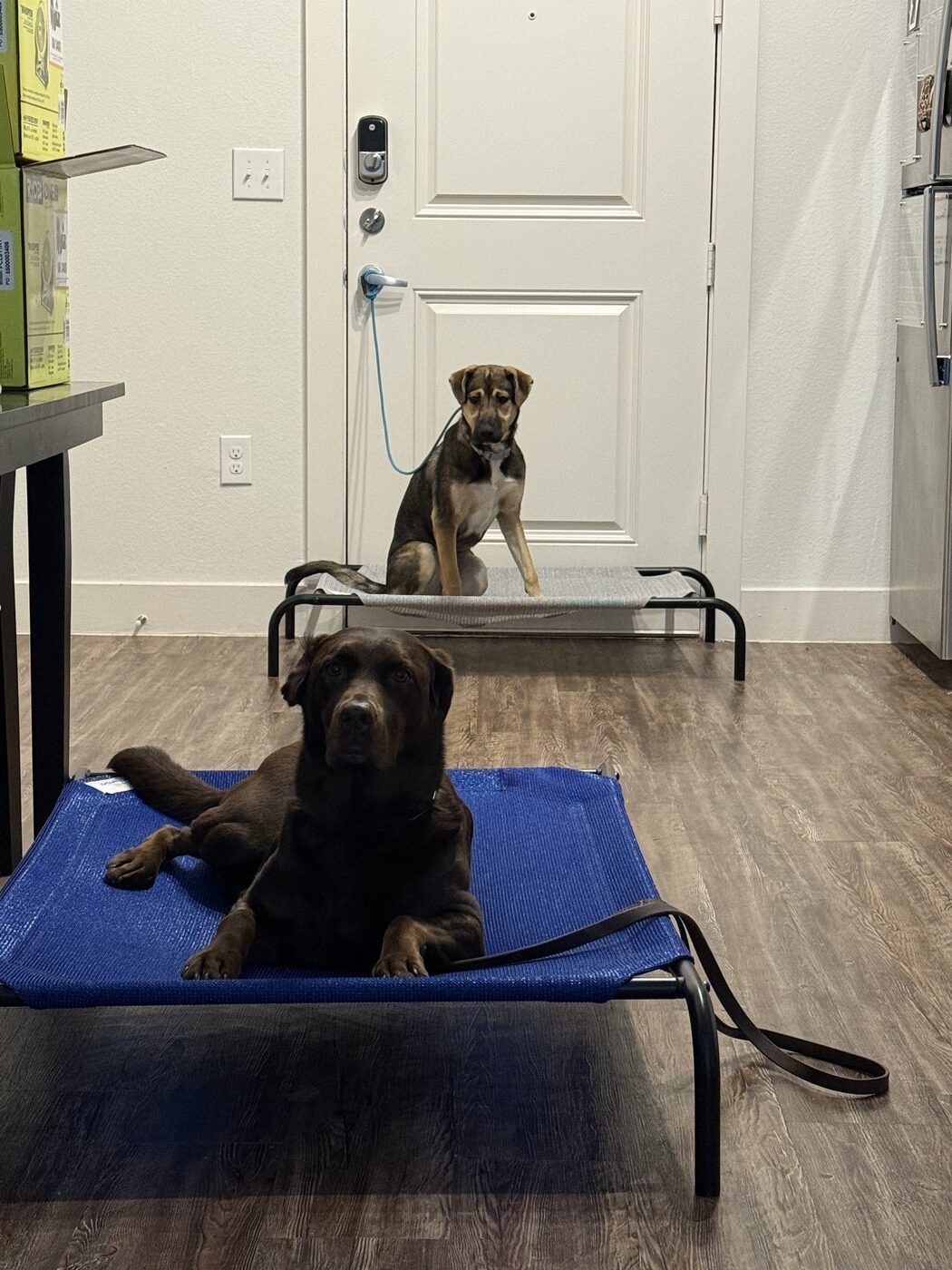
- Sit, down, and place. Place means "go to your bed and remain there." It is one of the most useful household commands we teach because it gives your dog a clear job while you cook, answer the door, or eat dinner.
- Continued leash training. Your puppy should become comfortable wearing the leash, following your direction, and moving with you. Formal heeling is not the priority yet.
- Recall around slight distractions. Practice on leash so you can reinforce the command and prevent your puppy from learning that responding is optional. Only practice recall off leash in a safely enclosed area if your puppy consistently responds the first time you say its name or give your chosen recall command, such as "here."
- Name recognition and eye contact under mild distraction. Gradually increase the difficulty while keeping the puppy successful.
The socialization checklist
Aim for variety over volume. Quality exposures during which your puppy remains relaxed are more valuable than a hundred overwhelming experiences.
- People: Children, elderly people, men with deep voices, and people wearing hats, hoods, uniforms, or sunglasses
- Surfaces: Metal, wet grass, gravel, tile, stairs, and grates
- Sounds: Traffic, sirens, lawn equipment, thunder, fireworks, and the vacuum
- Places: The veterinarian's parking lot without an appointment, a friend's house, an outdoor patio, and car rides that do not always end at the veterinarian
- Handling: Nail trims, brushing, ear checks, and calmly being held still
Write down what you have covered. Owners consistently overestimate how much variety their puppy has actually experienced.
Stage 3: 4 to 6 months. Adolescence begins.
Teething, testing, and the sudden discovery that the recall you built no longer works when a squirrel is involved. This is where most owners conclude that training "stopped working." Nothing stopped working. The environment got harder and the dog got braver.
What to focus on
- Proofing, not new commands. Same skills, harder places. Sit at the front door. Down on a patio. Place while the doorbell rings.
- Loose leash walking in earnest. Now that the leash is familiar, teach the rules.
- Long line recall. A 20 to 30 foot line gives freedom while keeping you in control. This is the bridge to real off leash reliability later.
- Impulse control. Wait at doors. Wait at the food bowl. Wait before jumping out of the car.
- Structured rest. An overtired adolescent puppy behaves like a badly behaved one. Many "hyper" puppies are simply sleep deprived.
Expect regression
Your puppy will forget things it knew perfectly at 16 weeks. This is normal adolescent development, not defiance and not a failure on your part. Lower your criteria, raise your reward rate, and keep going.
Stage 4: 6 to 12 months. Reliability.
Session length: 10 to 15 minutes, and the real work now happens on ordinary outings rather than in training sessions.
- Real world proofing. A dog that holds a down at home has not been trained. A dog that holds a down on a busy patio in Frisco has.
- Second fear period awareness. If your confident dog suddenly spooks at something familiar, do not force it and do not make a fuss. Give space, stay neutral, move on.
- Off leash foundations. Only once on leash obedience is genuinely reliable. Off leash work is a proofing stage, not a shortcut.
- Neutrality around other dogs. The goal is a dog that can calmly ignore other dogs, not one that must greet every one. This is the single biggest predictor of whether your adult dog is pleasant to walk.
Session length by age
| Age | Session length | Frequency |
|---|---|---|
| Under 12 weeks | 1 to 5 minutes | 4 to 6 times daily |
| 3 to 4 months | 5 to 8 minutes | 3 to 5 times daily |
| 4 to 6 months | 8 to 12 minutes | 2 to 4 times daily |
| 6 months and up | 10 to 15 minutes | 1 to 3 times daily |
Short and frequent beats long and occasional at every age. Always end on a success.
Where a professional helps most
You do not need a trainer to teach a puppy to sit. The stages where outside help changes outcomes are:
- 8 to 16 weeks: building a socialization plan you will actually execute, and catching early warning signs of fear or handling sensitivity while they are still easy to change
- 4 to 8 months: the adolescent regression, when most owners lose confidence and let habits set
- Any point where something feels off: growling over food or toys, hiding from visitors, snapping during handling, unusual fear. These are far easier to address at 5 months than at 2 years
At True North Canine, most puppy owners start with Private Lessons in their own home, because puppy problems live in the house. Virtual Lessons work well for foundations and quick check-ins between visits. For adolescents who need concentrated daily repetition, Board & Train is often the faster route.
Every graduate keeps lifetime access to our weekly group classes across DFW, which matters most for exactly this age group. Adolescent dogs need ongoing exposure to real distractions, and that is difficult to arrange on your own.
Frequently Asked Questions
When should I start training my puppy?
What should my puppy know at 12 weeks?
Can I socialize my puppy before vaccinations are complete?
What is a puppy fear period?
How long should puppy training sessions be?
Is it too late to train my dog if it is over 16 weeks?
Should I take my puppy to a dog park?
Starting with a new puppy?
Book an evaluation and we will build a stage-by-stage plan for your puppy's first year.
Consultations at the True North training location at 608 W Main St, Celina, TX 75009 are free. Travel consultations at your location cost $150 and are applied toward your program if you move forward.
Serving Celina, Prosper, Frisco, McKinney, Allen, Plano, Little Elm, The Colony, Aubrey, Melissa, Anna, Sherman, and the surrounding North Texas communities.
Results vary by dog, household, and owner follow through. No specific training outcome is guaranteed. Nothing here is veterinary or medical advice. Consult your veterinarian about vaccination and socialization risk.
More From The Training Journal
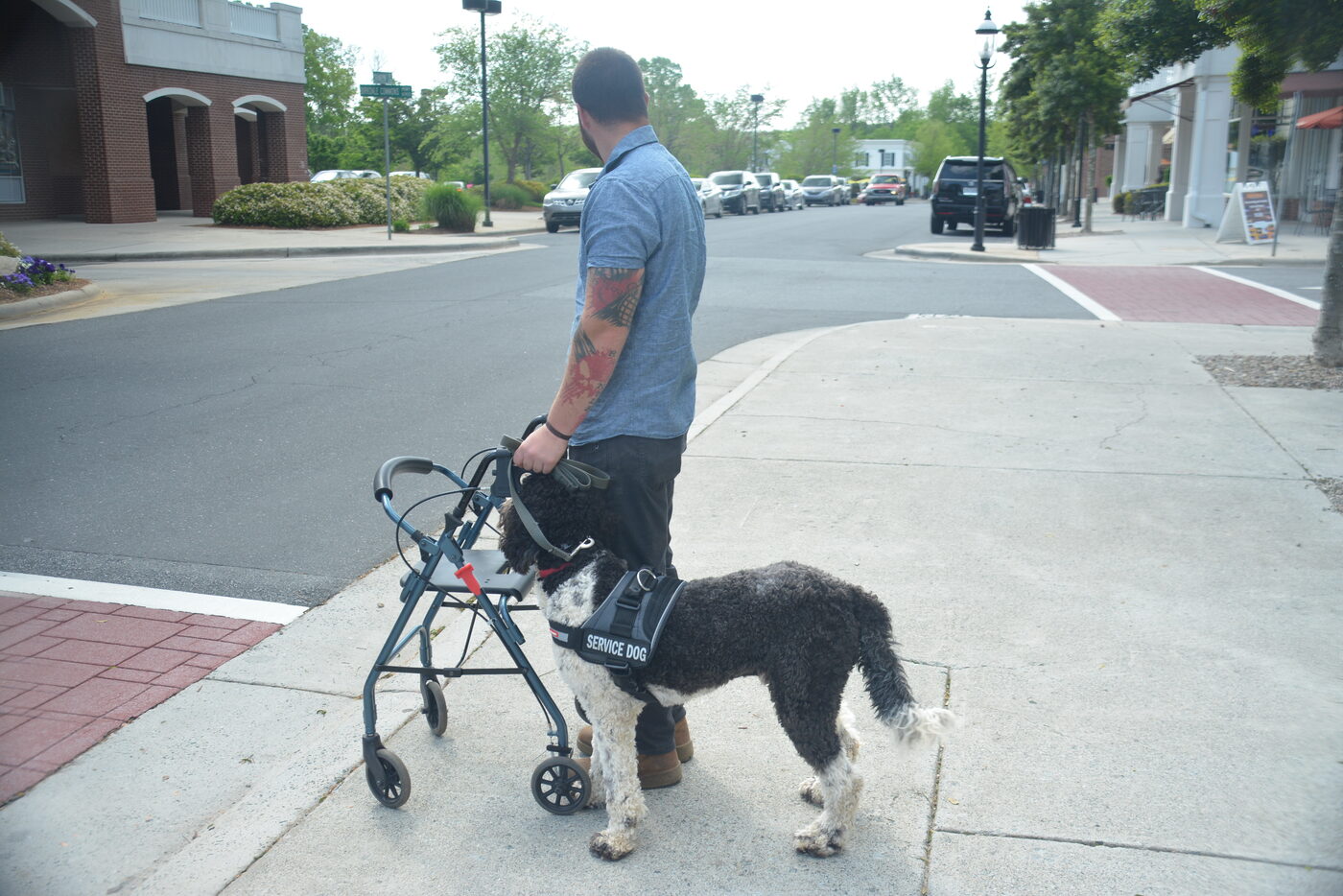
K9 Training for Family Dogs
Patrick Mullooly shares how years of training police K9s, military working dogs, and Special Ops canines help him build calm, reliable family dogs.
Read article
How to Choose a Dog Trainer in North Texas
12 questions to ask before hiring a dog trainer in North Texas, plus the red flags to walk away from. Written by a Celina based military K9 trainer.
Read article
E-Collar Training: An Honest Guide
Are e-collars cruel? A Special Operations K9 trainer explains how remote collars are properly conditioned, and what off leash freedom really takes.
Read article